

Virgin Australia CEO Dave Emerson’s vision for the airline’s future
Plus, "our flights have been diverted, missiles are falling..." wasn't on his bingo card for 2025.
Posted:
September 16, 2025 - 11:02 am
What we'll be covering
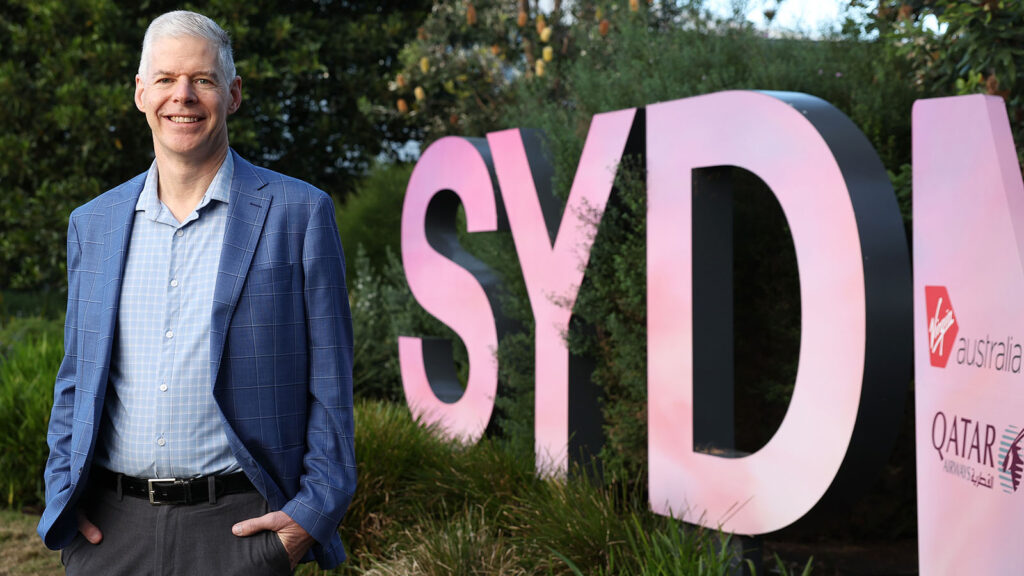
Virgin Australia is back as a public company, with Qatar Airways also now owning a 25% stake. It’s a stark difference to the days of 2020, where the airline was teetering on the brink of collapse. With bluer skies ahead, Virgin Australia CEO Dave Emerson is optimistic about the carrier’s future – but perhaps, with a slightly more realistic view than the company’s pre-COVID leaders.
“As much as Virgin did a lot of great things before administration, they didn’t actually earn money,” says Emerson. The comment references the airline’s regular annual losses or slim profits during that time. In contrast, in the financial year ended on 30 June 2025, the group declared a pro forma net profit after tax of $331 million, off the back of $5.81 billion in revenue.
Emerson is also bullish on the future of the travel market. Speaking at the recent CAPA Airline Leader Summit in Cairns, the Virgin boss observes that “I see no evidence that the desire to travel in any way is going down. If anything, that’s going up.”
“When you look at everything that consumers are doing, they’re prioritising experiences. And travel is one of those premium experiences that people are willing to invest in. Particularly those once-in-a-lifetime trips, those things that are going to make memories for forever. So I don’t see any change in that.”
In this extended interview, Emerson reflects on Virgin Australia’s place in the market today, its future growth, long-haul flying, competition against its domestic arch-rival Qantas, and middle-of-the-night phone calls he’d sooner avoid.
American Express Velocity Platinum

Virgin Australia’s recent challenges
It’s well-known that Virgin Australia’s journey to an IPO faced a few speedbumps and delays. Eventually, it got there – but not without a last-minute challenge.
“It’s probably a little bit of a different IPO experience than some,” Emerson hints. “At 3 am the night before, I get a call that says, oh, our flights have been diverted, missiles are falling.” The same call was made to Virgin Australia’s Chief Financial Officer, Race Strauss.
“Miraculously, by 8 am, peace was declared, the clouds parted, and all of a sudden, it was all good again,” continues Emerson. “That’s the world we’re living in now. It’s a different and strange world where events seem to come and go much more rapidly than what we might’ve expected in the past. So the issue of the day is a big issue, but it seems to move.”
While airspace issues around Qatar can impact Virgin Australia’s new ‘wet lease’ services to Doha, Virgin Australia remains predominantly a domestic carrier. Strauss embraces that fact, later adding that “Australians love to travel, and with the geopolitical issues going on, maybe people are travelling more domestically than they are internationally. So in a funny way, we benefit from that.”
Is Virgin Australia making another premium push?
Qsuite Business Class. Caviar. Dine on demand. This is what awaits up front on Virgin Australia’s new wet lease flights to the Middle East. But as we’ve commented in the recent Point Hacks podcast, it’s a stark contrast to the airline’s domestic travel experience. Especially if you’re in Economy, where you have to hand over a credit card for so much as a Diet Coke.
But is Virgin Australia making a wider tilt towards the premium segment, beyond those few Doha routes? After all, the carrier is preparing to launch a new Platinum Plus frequent flyer tier, is implementing new spend-based requirements for status, and offers its invitation-only Virgin Australia Beyond service as a rival to the Qantas Chairman’s Lounge.
“Yeah, look, when we reset the business, we had a very clear vision of who we were, how we thought we could win, and what our place in the market was going to be,” explains Emerson. “We said, we believe we can win in the value segment. We think they’re underserved, the small business, value-centred corporates and premium leisure, we think we can offer the very best product for those customers.”
“When we look at the Australian market, we think that means we could win about a third of the market. And that’s the way we designed the plan right from the beginning. We still think that’s the case, and so we’ve got about a third of the capacity today. We think that’s about right, that we’ll probably continue to stay wrapped in that space. Now the market’s going to grow, and we’ll grow with that market, but we really are focused on driving more value for our core customers.”
In other words, Virgin Australia isn’t directly positioning itself as a true rival to the higher-level premium and corporate base that typically prefers Qantas. If it were to do that, “we’d have to go after other market segments.” These are “segments where we don’t currently have competitive advantages.” For instance, global alliance membership, separate lounges for Platinum-tier travellers, and relative standardisation of international partner airline benefits.
“You never say never in business because that’s always possible, but it’s not something that’s in our near-term plan.”
Is there scope to expend into the long-haul space?
By nature, the wet lease flights to Doha aren’t operated by Virgin Australia. They’re served using Qatar Airways aircraft, pilots and cabin crew. Virgin Australia essentially pays for the flying behind the scenes – similar to how Qantas uses Finnair on selected routes to Asia.
As for the Doha flights, “it’s really sort of a test and learn for us,” Emerson imparts. “We get all the benefits of long-haul flying, but without having to go and spend a billion dollars on new aircraft. And so we will monitor the performance of these flights and see how they do, see what the economics look like. That’ll give us a better ability to understand whether we have an investment case to put our own capital into long-haul.”
As for any change, don’t expect anything to happen before 2027 at the earliest. “This is a five-year authorisation partnership. We’ll take the first couple of years, see where the results come out, and then we’ll see what that means for our ability to invest.”
“As you would know, it’s almost impossible to get widebody aircraft for many, many years. So that would be another thing we’d have to consider if we would want to do that.” Looking further ahead, “I think forecasting where airlines are going to be in 10 years is a great way to look foolish, because I’ve heard that before. We’ve never ever gotten it right.”
“But if you look over the long term, the one thing that you’ve been able to count on is that demand has grown with or faster than GDP all over the world for decades. And I think that will be true. The shape of the industry will change, competitors will move around, technology will change. But the desire to travel will be there.”
In the domestic skies, “honestly, we fly the same planes in the same market. But we think our culture and people are different, and we think that’s what we’ll build on in the market. That’s what I care about, and we work hard to keep that going.”
Also read: Qantas Domestic CEO: “we’re not considering a revenue-based program”
Featured image by James D. Morgan for Getty Images/Virgin Australia.
Stay up to date with the latest news, reviews and guides by subscribing to Point Hacks’ email newsletter.
Virgin Australia CEO Dave Emerson’s vision for the airline’s future was last modified: September 16th, 2025 by
You may also like

Qsuite with Virgin Australia: Is It Worth Your Velocity Points?

Exclusive – Qantas Domestic CEO: “we’re not considering a revenue-based program”
Community