

OPINION | Some airline loyalty programs have been steadily shifting toward prioritising spend over traditional ‘bum-in-seat’ flying. In Australia, Velocity Frequent Flyer has already taken a major step in that direction with its move to spend-based status earning, bringing the program more in line with global trends.
In the US, United Airlines has recently unveiled a major overhaul of its MileagePlus program. The changes heavily favour members who hold a United co-branded credit card, with new perks and earning opportunities. Meanwhile, anyone without those cards – including practically all international members – will be at a disadvantage.

While the updates could be beneficial for eligible cardholders, they’ve also sparked criticism from some frequent flyers who feel the changes tilt the program further towards financial partnerships. Notably, in its own 2026 program refresh, Qantas has emphasised that it will not transition to a fully revenue-based model for earning both points and status.
Love it or hate it, the spend-based model is here to stay for the programs that’ve already changed to it. Given that Velocity has already embraced spend-based status and offers additional perks for co-branded credit card holders, some elements of United’s latest overhaul could still offer inspiration. Here are a few changes Velocity might consider from United to make the deal sweeter for its members.
United is rewarding the ‘right’ customers
The best United perks will soon only be unlocked by holding the right credit card.
Increased mileage earn for cardholders
From 2 April 2026, United will overhaul how it awards miles on its flights. Have no status and no co-branded credit card? You would earn a grand total of nothing on Basic Economy. Have Premier 1K status and a United Club Card? You’ll enjoy 17 miles per dollar spent on most fares. The difference couldn’t be starker.
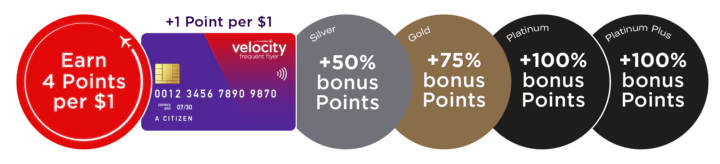
Velocity Frequent Flyer isn’t as extreme with its earning rates. Base-level Red members still earn a minimum of 4 points per dollar (down from 5 points previously). If you have an eligible Velocity Points-earning card, that’s an extra point per dollar. Elite status bonuses also apply to non-Lite fares.
Perhaps a larger Velocity Points boost could be offered to eligible credit cardholders who are also status members, just to sweeten the deal.
But where United is differentiating itself isn’t in the earning stage. It’s in the all-important redemption stage, and that’s where Velocity stops short – for now.
Discounts on award seat redemptions for cardholders
United cardholders will soon get 10% off all United award flights, while those with a credit card and Premier elite status will benefit from a 15% discount. These only apply to United-operated flights, and MileagePlus’ award seat pricing is quite variable due to dynamic pricing, but it’s an interesting concept nevertheless.
Cleverly, United will soon display the discounted price to all members, highlighting what discounts non-cardholders are missing out on.
Additional Saver award seat availability for cardholders
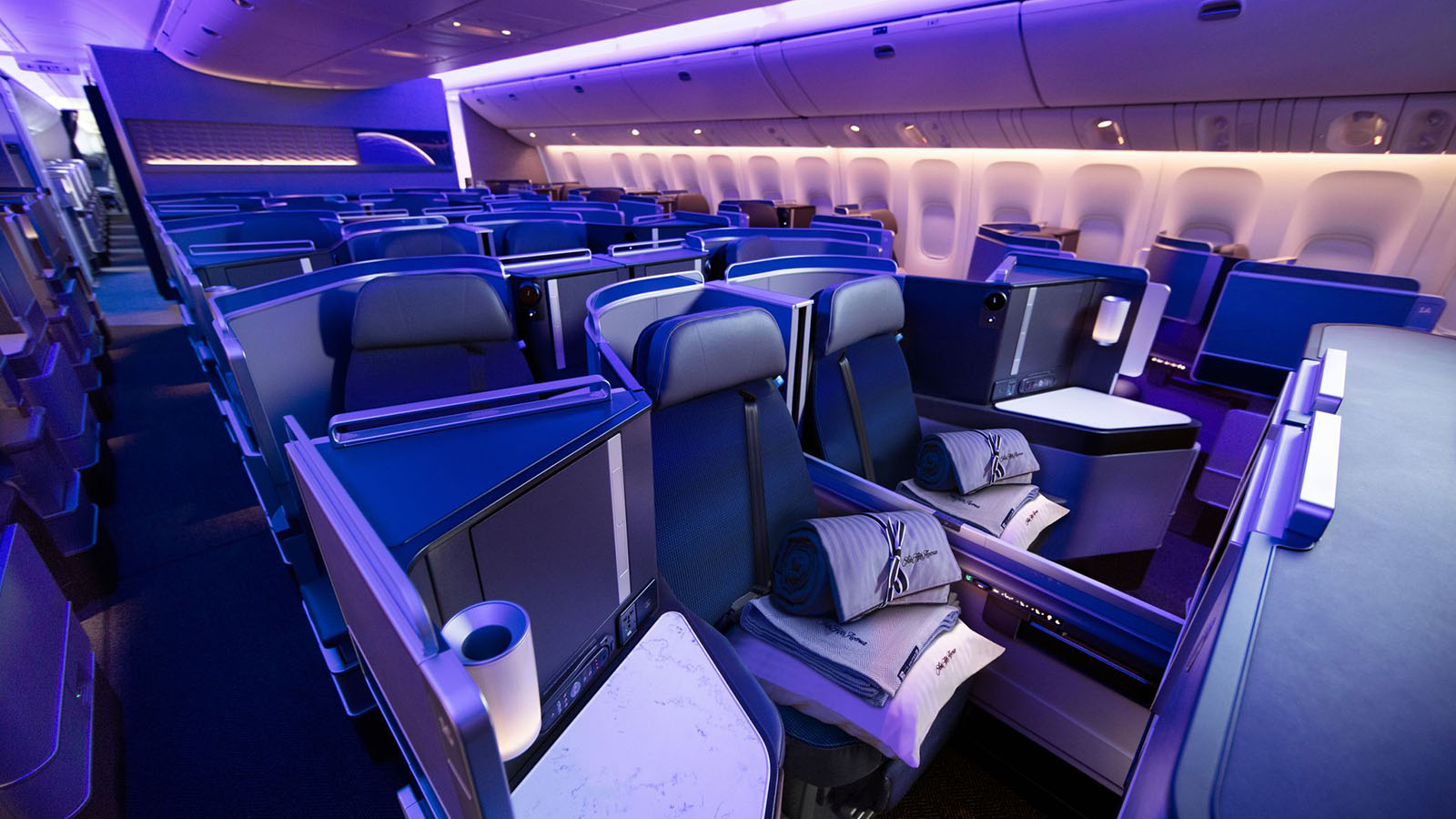
In addition to the discount above, United will also increase award seat availability in its Polaris Business Class cabin by offering cardholders additional Saver seat inventory. This was previously reserved for Premier status holders, but will now be shared with cardholders as well.
United says its cheapest Saver awards in Polaris Business Class start at 80,000 miles. With discounts, it will cost 72,000 miles (10% less) for cardholders with General status, or as low as 68,000 miles (15% less) for cardholders with Premier status.
Summing up: what could Velocity adopt from United?
Availability of reward seats remains one of the biggest pain points in Australia. Prioritising seats and introducing discounts for high-engagement members (credit card holders and/or tiered status members) could create a clearer incentive to engage more deeply with the program.
United has done this well by differentiating by both Premier status and cardholder membership. Velocity Frequent Flyer could bolster its spend-based program by following suit in Australia. But with credit cards still relatively easy to obtain compared to earning status, Velocity will need to walk a fine line between delivering value and diluting benefits when too many people qualify.
Take the American Express Velocity Platinum card. It already offers unlimited Virgin Australia lounge access for the primary Card Member when flying with VA, which removes much of the incentive to earn Gold status.
American Express Velocity Platinum

- Bonus points
- 50,000 bonus Velocity Points¹
- Annual fee
- $440 p.a.
- Earn
- 1.25 Velocity Points earned per $1 on all eligible spend except for government bodies⁵. 2.25 Velocity Points per $1 spent on selected Virgin Australia purchases⁵. 0.5 Velocity Points per $1 on Government spend⁵
American Express Velocity Platinum
- Bonus Points
- 50,000 bonus Velocity Points¹
- Annual Fee
- $440 p.a.
- Earn
- 1.25 Velocity Points earned per $1 on all eligible spend except for government bodies⁵. 2.25 Velocity Points per $1 spent on selected Virgin Australia purchases⁵. 0.5 Velocity Points per $1 on Government spend⁵
Earn 50,000 Velocity Points¹ when you apply online, are approved, and spend $5,000 on eligible purchases on your new American Express Velocity Platinum Card within the first 3 months. New American Express Card Members only.
What if Velocity implemented a hybrid model: a 10-15% reward seat discount and better availability on VA flights for its Gold or Platinum members who are also eligible co-branded credit cardholders?
Depending on its agreements with partner airlines, it could also offer better availability on select partners as well, such as Singapore Airlines. (Anecdotally, we’ve previously seen Velocity members have access to Singapore Airlines reward seats that weren’t showing up for KrisFlyer members, so there is the potential to offer better availability to a sub-group.)
By taking some notes from United and offering discounts on redemptions and improved availability for credit cardholders who also hold elite status, Velocity could encourage members to be both active cardholders and frequent flyers.
Over to you – what are your thoughts on Velocity’s system? Would you engage more if there were redemption benefits for being both a credit cardholder and a tiered status member?
Stay up to date with the latest news, reviews and guides by subscribing to Point Hacks’ email newsletter.



In my (limited) view, the value of Velocity’s partnership with United has really deterioriated (for Velocity members) over the past 6 months.
Sure, there is still decent reward seat availability in Economy on trans-Pacific flights, but Business class reward seats have disappeared entirely.
Is this registering with the right people at Velocity?
I agree on the points you raise. US domestic J flights (F in US airline-speak) are often available, I’m certain via QF, and seem to recall seeing them via VA, although I saw none just now. There were none searching with SQ either (I’m not a UA member), so it’s not just a VA thing. International premium cabin awards via VA have often been scarce on all their partners when I’ve looked.
But I don’t think VA’s UA partnership is the issue in this piece. Rather it’s the things that UA are doing with their programme and the spectre of VA doing the same here. But we aren’t there yet. Shifting status earning to non-flying transactions has expanded in the US, not just with UA, and I think it’s a worrying phenomenon. (I don’t have an issue with it over points earning, just status.)
Doing so makes achieving status contingent on ‘loyalty’ to the airline’s partner businesses not just its own flying business, and I think that would be a retrograde step, even though some might welcome it. What it does is shift the balance of the calculation about choosing between VA and QF, and potentially the balance between crediting international flights to VA or to one of its Star Alliance partners (and choosing partner flight numbers over VA on code share flights), where status would give them more consistent access to benefits than Velocity does.
Joining a global alliance would give Velocity a nudge for members travelling abroad (domestically it matters less), with guaranteed reciprocity in benefits and earning opportunities. Virgin, however has no realistic prospect of joining one. It foreclosed the option of Sky Team when it traded Delta for United, most of its partners are in Star Alliance but the Qatar stake in Virgin likely rules that out as an option, and QF has the right of veto over joining One World.
Of course there’s more to choosing an airline than frequent flyer programmes, and more to choosing a programme than status. Points/miles matter too. Everyone will value different things. For me, the sorts of things UA is doing are net negative, and would be should with VA should it choose to follow suit.
Well I’ve been told the new Virgin Money Credit Card is due to hit in March, April I’m considering being VA Platinum Plus and QF Platinum at the same time. Qantas offers First Class Lounge Access, Business Class Lounge Access and Qantas allows seats to be opened up for Platinum flyers on international routes. I value Velocity points higher than QF points, and only use the points for international flights, but with SQ downgrading Beyond and Platinum Plus members to the Silver Kris Lounge (YES SQ DID THIS NOT VA) (As punishment I would say) and also the issue in the G Spot (Iran) Velocity will need to pull some extra carrots out to compete. Also to note, SQ is allowing some of there members that don’t have First Class Lounge access to enter the First Lounge so that also tell me a lot.
A couple of Beyond lounge passes added would be helpful as said no first or business class lounges.
The problem for us is that while we could previously book business class seats fairly easily via velocity these changes have made it impossible
I’ve never had a problem. Currently seeing a lot of availability Sydney to Doha BC in early February
I meant on United, United availability has disappeared.
Points, Status Credits, Tiers are becoming as complicated as trying to compare health insurance. Maintaining the simplicity of a reward system can sometimes attract more loyalty than a more attractive reward scheme that is difficult to understand and maintain